
Stucco is widely used on Florida homes because it can provide a durable exterior finish while supporting a wide range of architectural styles, from traditional residences to modern custom homes. But like any exterior wall system, stucco is continuously exposed to sunlight, heat, humidity, wind-driven rain and normal building movement.
Recognizing stucco repair signs in Florida early can help homeowners distinguish between minor cosmetic imperfections and conditions that deserve closer evaluation. A small crack does not automatically mean a major structural problem. Likewise, simply painting over visible damage does not necessarily address the underlying cause.he key is to look at the pattern, location, progression and surrounding conditions.
This is especially important in Central Florida’s hothumid environment. U.S. Department of Energy Building America guidance notes that stucco walls in hot-humid climates can crack and leak because of installation and weather-related conditions and recommends treating the wall as a drained assembly rather than assuming the exterior plaster alone will stop all water.
For Orlando homeowners, understanding these warning signs provides a useful first step toward maintaining the exterior envelope of the home.
Why Stucco Damage Should Not Be Judged by Appearance Alone
The visible stucco finish is only one component of the exterior wall. Depending on the construction system, a stucco assembly can involve a substrate, water-resistive barrier, lath, fasteners, plaster coats, flashing, drainage components and finish materials.
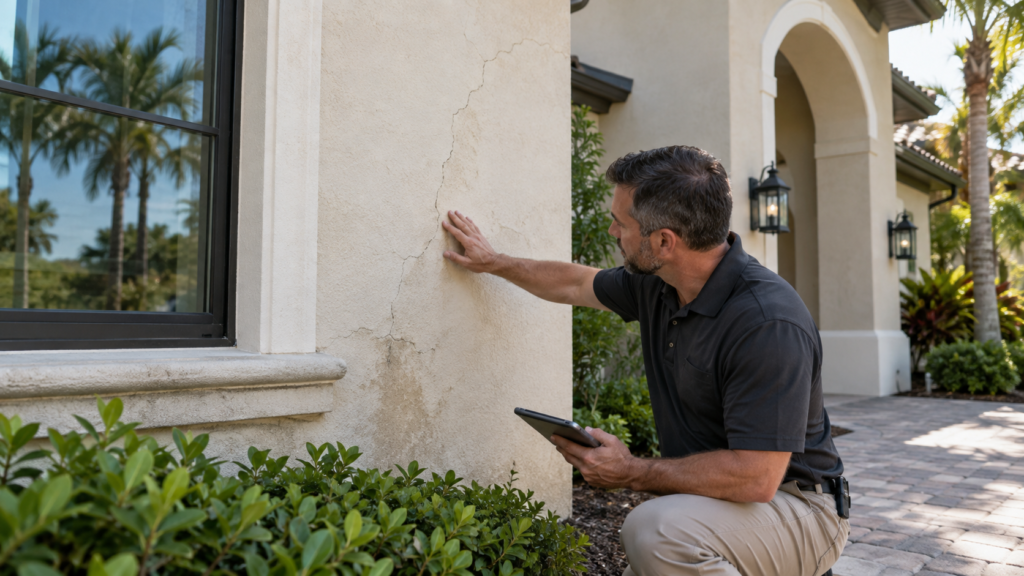
The current Florida Residential Code requires water-resistive barriers behind applicable exterior wall veneers and addresses continuity at penetrations and other building elements.
For stucco work, Florida’s residential code also references established plaster and lathing standards. ASTM C926 covers the application of Portland cement-based plaster, including material proportions, thickness, curing and application requirements, while ASTM C1063 addresses lathing, furring, fasteners and accessories used to receive plaster. This means damage visible on the surface can sometimes reflect something occurring deeper within the wall assembly. For that reason, homeowners should avoid diagnosing stucco only by color or appearance.
Hairline Cracks: When Should You Pay Attention?
Hairline cracking is one of the most common conditions homeowners notice. Small cracks can occur because cement-based plaster undergoes shrinkage as it cures, and minor building movement can also contribute to surface cracking. ASTM C926 specifically includes curing requirements intended to improve plaster performance and help resist cracking. A very thin, stable crack does not necessarily indicate serious failure. What matters is whether it:
Continues growing, repeatedly returns after repair, develops staining around it or appears together with other signs such as bulging or moisture intrusion.
The National Park Service’s technical guidance on stucco repair similarly notes that cracks can allow water entry and that building settlement or vibration can contribute to cracking. Although that publication focuses on historic stucco, the diagnostic principle is useful for modern homeowners as well: understand why the crack developed before simply covering it.
Larger or Widening Cracks
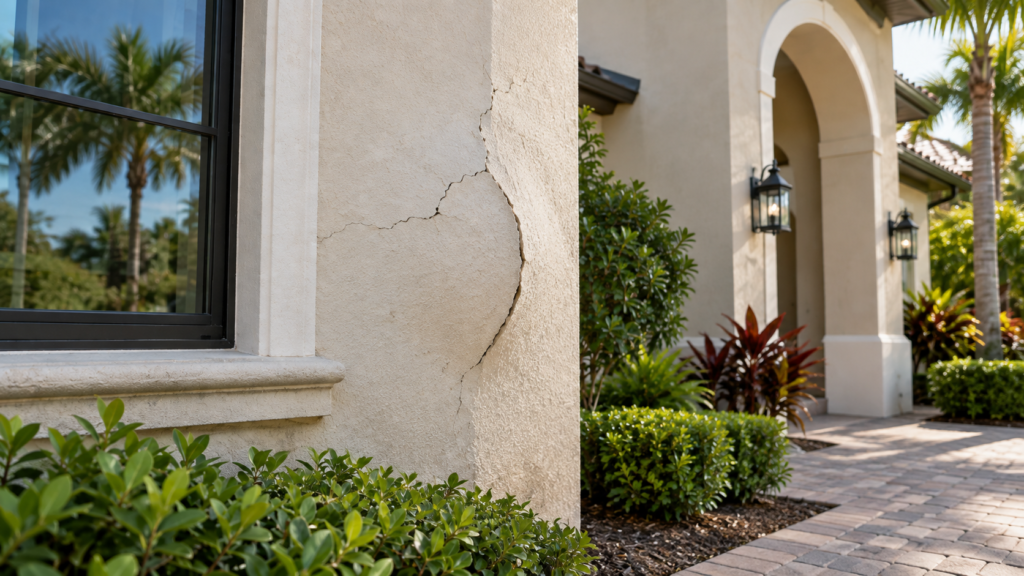
Cracks that are visibly wider than surrounding hairline imperfections deserve closer attention. The direction and pattern can also provide useful clues. A single isolated crack may relate to localized movement or a transition between materials. Multiple cracks concentrated around windows, doors or structural transitions may indicate movement occurring at those locations.
Diagonal cracks, recurring cracks or cracks that visibly widen over time should not automatically be labeled structural damage but they are reasonable reasons to request professional evaluation. The objective is to determine whether the damage is limited to the finish coat or whether movement is occurring within the substrate or building system. Simply filling the visible line without identifying the cause can result in the crack reappearing.
Cracks Around Windows and Doors
Windows and doors create interruptions in exterior wall assemblies. These locations require careful coordination between the wall system, flashing, water resistive barrier and the opening itself. The Florida Building Code emphasizes exterior wall envelope detailing, including flashing, intersections, drainage, water resistive membranes and details around openings.
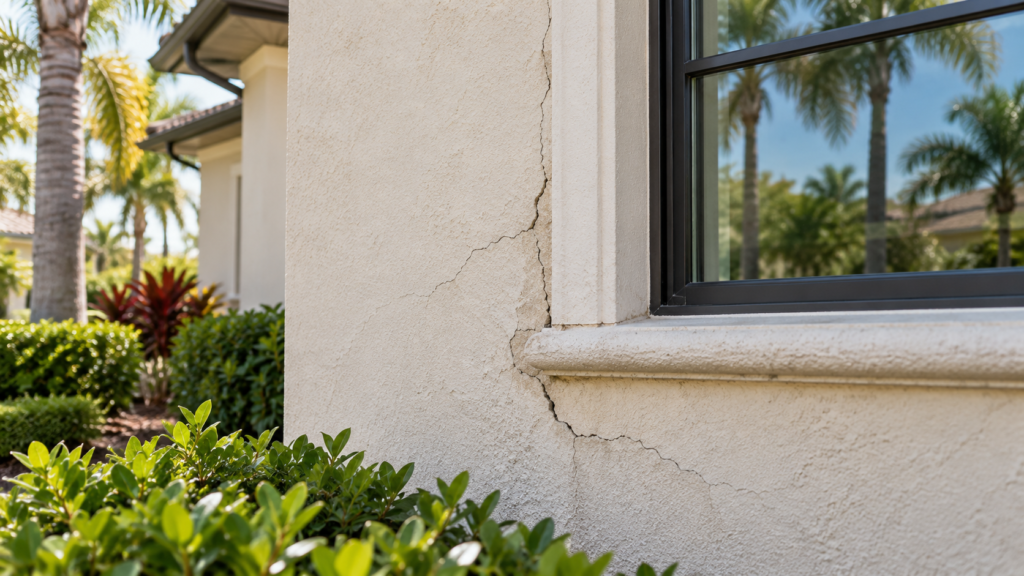
Therefore, cracks or persistent staining near windows and doors deserve attention. The problem may be limited to the stucco finish, but homeowners should also look for accompanying conditions such as:
- Water staining, deteriorated sealant, recurring interior moisture or visible separation between materials.
- Repairing the surface without addressing an opening or flashing problem can allow the condition to return.
Dark Stains or Persistent Discoloration
Not every stain indicates water intrusion. Florida’s exterior walls can develop discoloration from dirt, landscaping irrigation, biological growth and environmental exposure.
However, staining that consistently appears in the same location particularly below windows, roof transitions, penetrations or wall joints may justify additional investigation. Moisture moving through or behind exterior assemblies can sometimes produce visible staining.
DOE guidance for hot-humid construction emphasizes the importance of directing water out of wall systems and maintaining drainage paths around windows and exterior assemblies. Look for patterns rather than isolated marks. A random dirt streak may simply require cleaning. Repeated discoloration accompanied by cracking, soft material or interior moisture is more significant.
Bulging or Bowed Stucco
A stucco wall should generally follow the plane of its underlying construction. Areas that appear visibly swollen, bowed or separated from adjacent surfaces deserve professional attention. Bulging can suggest that portions of the plaster have lost proper attachment or that deterioration has occurred behind the visible finish.
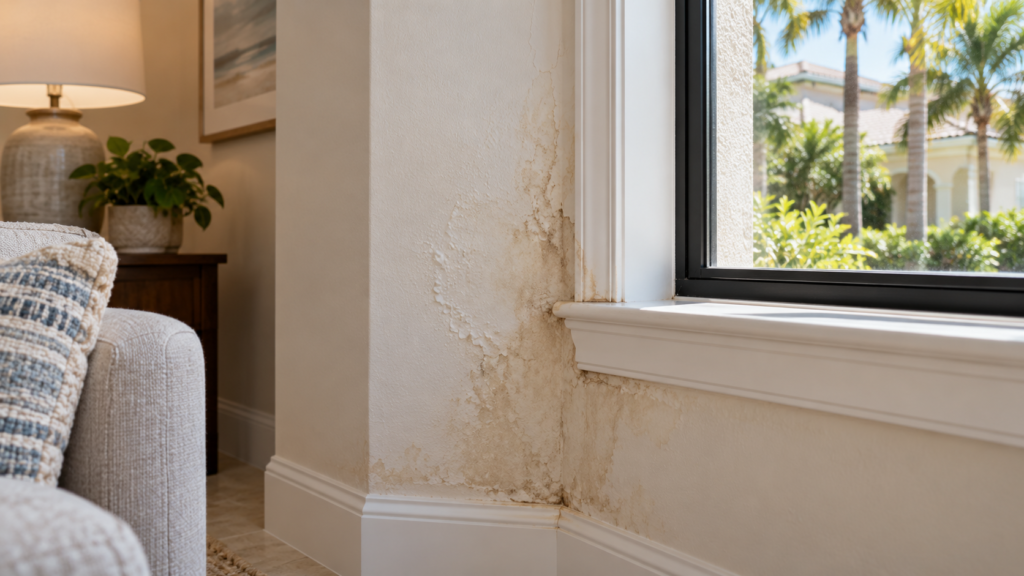
The National Park Service identifies bulging and cracked areas as obvious locations to begin when evaluating stucco deterioration. It also describes tapping suspect areas to identify sections that may have lost adhesion. Homeowners do not need to perform aggressive testing themselves, If an area looks visibly separated or moves when touched, avoid disturbing it unnecessarily and have it evaluated.
A Hollow Sound When the Wall Is Tapped
Sound can sometimes reveal a difference between well-bonded plaster and material that has separated from its substrate.Technical stucco assessment guidance describes unsound areas as sometimes producing a hollow response when gently tapped. A hollow sound alone does not diagnose the full cause. But when combined with cracking, bulging or loose material, it can indicate that the plaster has lost adhesion. That may require more than a surface patch. The affected material may need to be removed back to a sound boundary before the repair can be properly integrated into the existing system.
Chipping, Spalling or Pieces Breaking Away
When stucco begins breaking away from the wall, the condition has progressed beyond a simple hairline crack. Loose pieces can expose underlying layers to additional weather. National Park Service maintenance guidance notes that spalled stucco indicates damage and that cracks can allow rainwater penetration if exterior surfaces are not maintained. Spalling can have several possible causes, so homeowners should not assume that applying new finish material over the affected area will solve the problem. The damaged material should first be evaluated to determine the extent of deterioration and whether the underlying substrate remains sound.
Soft, Powdery or Crumbling Areas
Stucco should not easily crumble under normal light contact. A surface that has become unusually soft, chalky or powdery may indicate material deterioration. Weather exposure, prolonged moisture or problems with the original plaster application can contribute to deteriorated areas. ASTM C926 establishes requirements for materials, proportioning, plaster application and curing precisely because the finished system’s performance depends on correct installation. If deterioration extends beneath the finish coat, cosmetic patching may not provide a durable repair.
Rust Colored Stains
Rust staining deserves particular attention because stucco assemblies over framed construction may incorporate metal components such as lath, fasteners and accessories. ASTM C1063 covers metal plaster bases, accessories, weep screeds, clips and fasteners used in plaster construction. Visible rust stains do not automatically confirm failure of the lath or fasteners. However, recurring orange or brown staining especially when accompanied by cracking or localized deterioration may indicate moisture reaching a metal component within or adjacent to the stucco assembly. That condition should be investigated before simply repainting the stain.
Damage Near the Bottom of the Wall
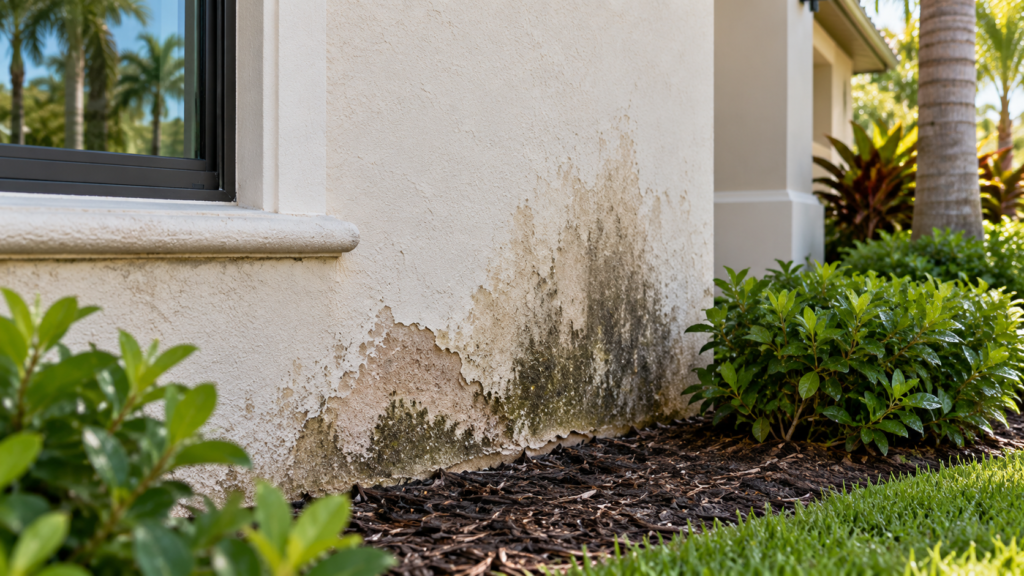
The lower portion of a stucco wall is exposed to several potential moisture sources. Rain splash, irrigation, landscaping, soil conditions and drainage can all affect this area. Repeated staining or deterioration at the base of the wall may indicate that water is being directed toward the building instead of away from it. Stucco assemblies can include components specifically intended to promote drainage, including foundation weep screeds covered by plaster installation standards such as ASTM C1063. For homeowners, this means the bottom edge of a stucco wall should not be ignored when inspecting the exterior. Look for recurring moisture patterns, damaged finish material and landscaping or irrigation that constantly wets the wall.
Interior Moisture Can Also Point to an Exterior Problem
Sometimes the strongest warning sign is not visible on the stucco itself. Water staining on interior drywall, bubbling paint, moisture around windows or unexplained dampness following heavy rain can indicate an exterior-envelope issue that warrants investigation. That does not necessarily mean stucco is the source. Roofing, windows, flashing, sealants, plumbing and other penetrations can also introduce water. But if interior moisture occurs near an exterior stucco wall, the wall assembly should be considered as part of the investigation. DOE’s Building America guidance emphasizes drainage and water management for stucco walls precisely because water that reaches the wall assembly needs a path back to the exterior.
Previous Repairs That Keep Cracking Again
Recurring repairs are one of the clearest signs that the original cause may not have been addressed. If a repaired crack repeatedly reopens, the issue may involve continued movement, inappropriate repair materials, inadequate preparation or a problem within the substrate. Repair material should not merely conceal movement. The National Park Service recommends assessing the extent and cause of deterioration before carrying out stucco repair. For modern residential projects, the same principle makes sense: diagnose first, repair second.
When Is Stucco Damage Mostly Cosmetic?
Not every imperfection requires major reconstruction. Minor color variation, small stable hairline cracks and slight texture differences may primarily affect appearance. This is particularly relevant to the previous A7 article:
Stucco Finishes for Florida Homes: Smooth vs. Textured
Smooth finishes tend to make minor imperfections more visible, while texture can visually disguise some surface variation. That does not mean textured stucco is structurally superior. The distinction is primarily visual. If the wall is stable, dry and properly attached, some minor imperfections may only require maintenance or localized cosmetic work.
When Should a Professional Evaluate the Stucco?
Professional evaluation becomes more important when several warning signs appear together. For example:
A widening crack combined with staining, a bulging section that sounds hollow, recurring repairs near a window or surface deterioration accompanied by interior moisture. The combination often provides more useful information than one isolated symptom. A qualified contractor can help determine whether the problem appears limited to the finish or whether additional evaluation of the wall assembly is appropriate. Structural movement or significant water intrusion may require coordination with other qualified professionals depending on the circumstances.
Why Florida’s Climate Makes Maintenance Important
Stucco is particularly common in Florida, but the state’s climate places constant demands on exterior building assemblies. Strong ultraviolet exposure, heavy rain, wind driven moisture and prolonged humidity all influence exterior materials. Building America specifically identifies stucco as popular in Florida’s hot-humid climate while warning that cracking and leakage can occur from weather and installation-related conditions.
This is why preventative inspection matters. Homeowners do not need to wait until large sections of stucco are falling away. Periodic exterior inspection can reveal small changes before deterioration becomes more extensive.
Stucco Repair Signs in Florida Homeowners Should Not Ignore
The most useful approach is not to panic over every crack. Instead, monitor changes and look for combinations of symptoms. A stable hairline crack is different from a crack that widens every few months. A superficial stain is different from recurring discoloration accompanied by moisture. A minor patch difference is different from a wall that is bulging or separating. Understanding those differences helps homeowners make more informed decisions about maintenance and repair.
Final Thoughts on Stucco Repair in Florida
Stucco can provide a durable and attractive exterior for Florida homes when the complete wall system is properly designed, installed and maintained.
The most common warning signs include cracking, recurring stains, bulging, hollow areas, loose material, soft or deteriorated surfaces and moisture-related symptoms. None of these conditions should automatically be interpreted as catastrophic damage. But they should also not be repeatedly covered with paint or patch material without understanding what caused them.
Orlando currently reviews applicable permits under the Florida Building Code, 8th Edition (2023), and the code incorporates requirements addressing exterior wall-envelope water management along with recognized plaster and lathing standards. For homeowners, builders and developers, the best approach is simple: identify the condition, understand the cause and then choose the appropriate repair.
DOES YOUR STUCCO SHOW SIGNS OF DAMAGE?
Talk with A7 about stucco repair, exterior finishes and professional construction services for residential properties in Orlando and Central Florida.