
Florida Climate and Stucco: The Direct Answer
Florida’s heat, humidity, intense sun, wind-driven rain, and frequent storms directly affect when stucco can be applied, how it cures, and how long the finished wall performs. In Orlando and Central Florida stucco installation depends on controlling moisture, choosing suitable materials, protecting fresh work from rapid drying or rain, and detailing the wall so water can drain. Stucco is durable, but climate aware installation and routine inspection are essential.
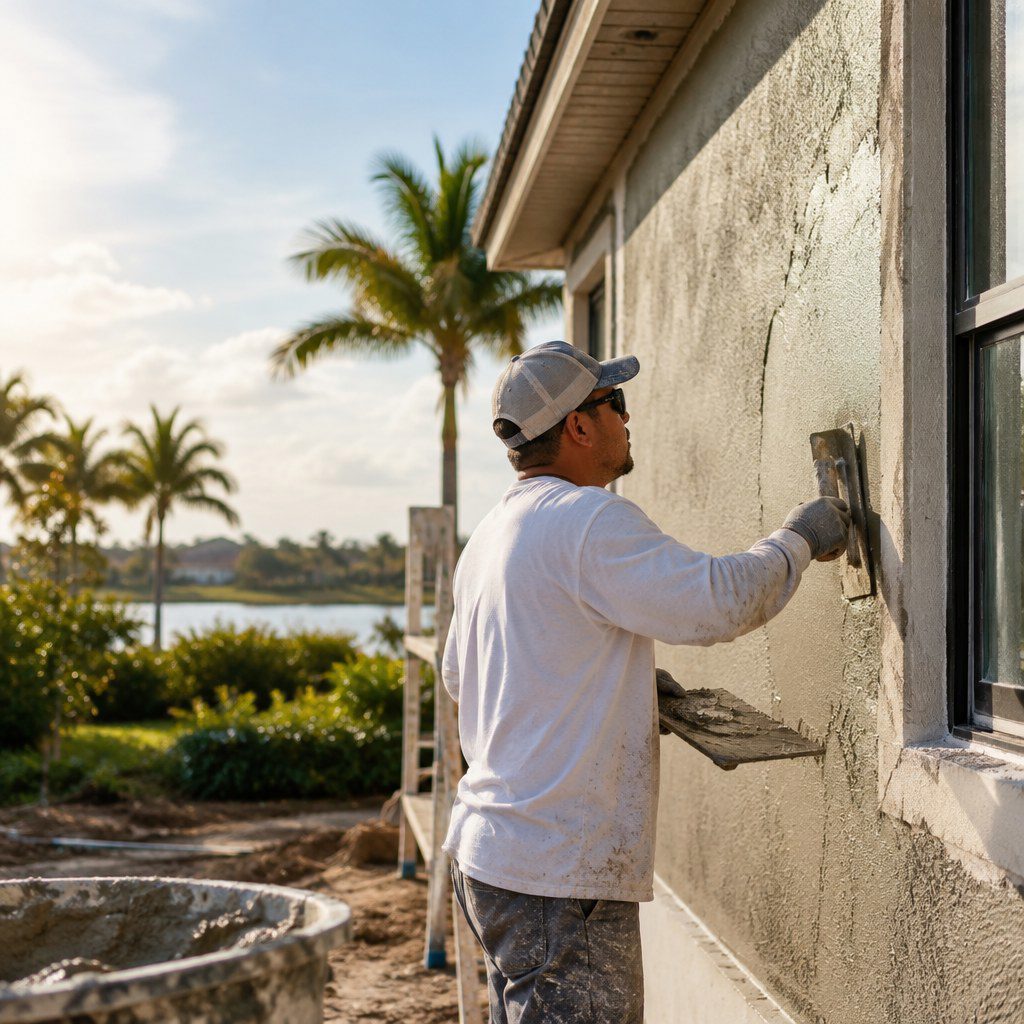
How Weather Changes Stucco Installation
Weather conditions matter from substrate preparation through final finish. Contractors should evaluate the wall, forecast, shade exposure, and expected drying conditions before mixing begins. Work may need to pause when rain threatens or when surfaces are excessively hot.
Heat and sun
Strong sunlight can pull moisture from fresh stucco too quickly, reducing the time available for proper curing and finishing. Uneven exposure may also create visible color variation in integrally colored or cement-based finishes. Scheduling around direct sun, dampening an appropriate absorptive base, and following the manufacturer’s curing instructions help limit problems.
Humidity and rain
High humidity can slow evaporation, while sudden afternoon rain can wash, streak, or spot uncured material. Openings, roof-to-wall intersections, penetrations, and lower wall terminations require careful flashing and drainage details. These details matter more than simply applying a thicker finish.
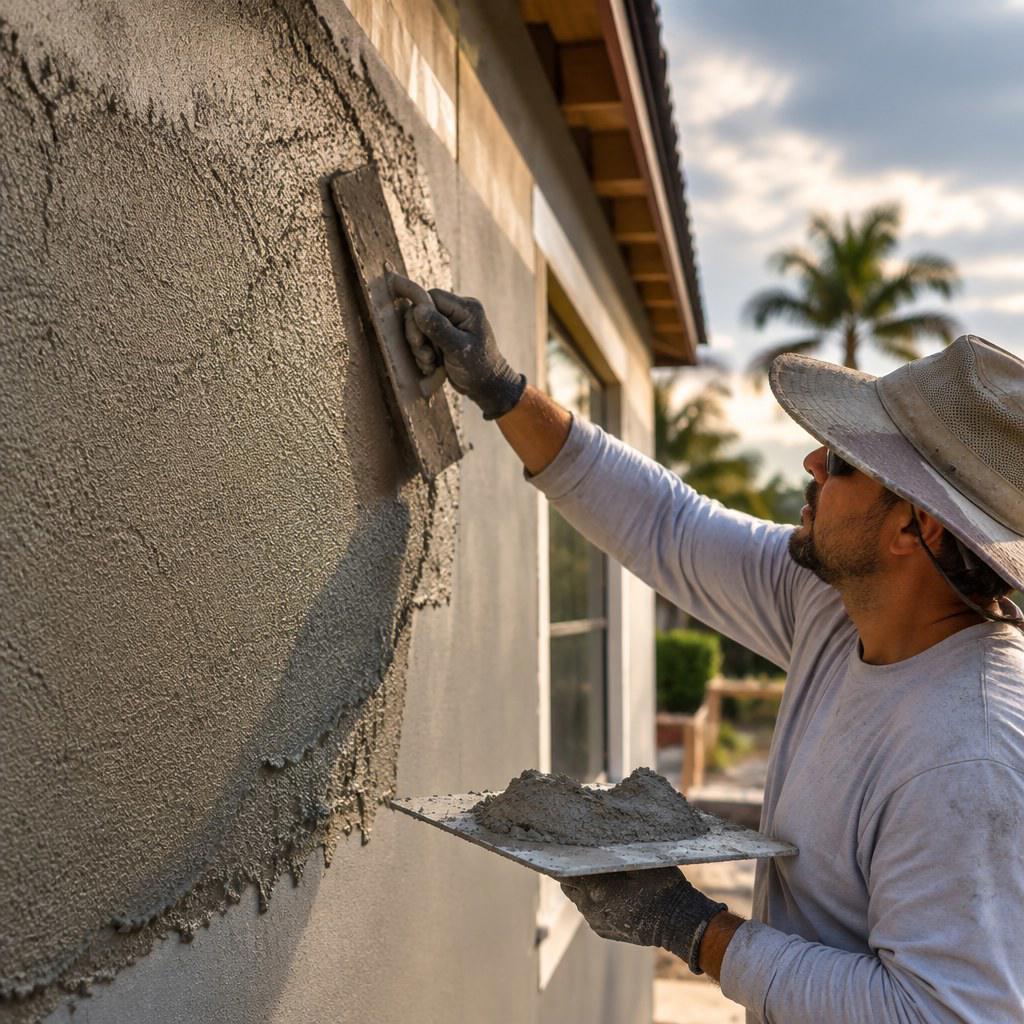
Florida Moisture, Storms, and Wall Performance
Long-term performance depends on what happens behind the visible surface. Cracks, failed sealant, missing flashing, or poorly integrated windows can admit water. Because humid conditions slow drying, trapped moisture may contribute to staining, coating failure, corrosion of embedded metal, or deterioration of adjacent materials.
Wind-driven rain and hurricanes
Storms push rain toward joints and transitions that remain relatively dry during ordinary showers. Stucco itself should not be expected to correct weak transitions. A durable assembly coordinates the weather-resistive barrier, lath or approved base system, flashings, sealants, control joints, and finish. After severe weather, owners should check for impact damage and new cracks.
Movement, cracking, and repairs
Daily heating and cooling cause materials to expand and contract at different rates. Minor hairline cracking may be superficial, but widening, displaced, recurring, or moisture-stained cracks deserve professional evaluation. Repairing only the surface can hide an unresolved leak or movement issue.
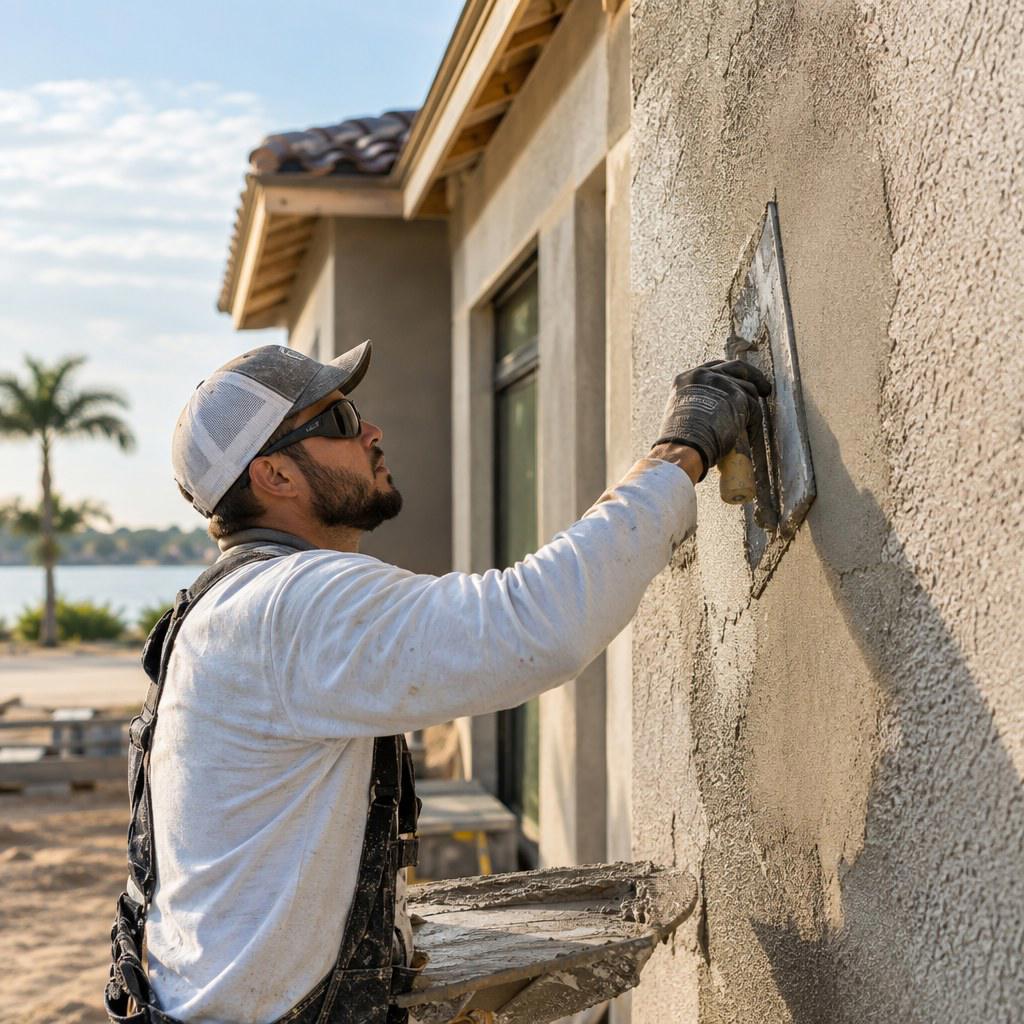
Material and Finish Choices for Central Florida
The right stucco system depends on the substrate, building design, exposure, desired appearance, and compatibility with existing construction. Traditional cement plaster and proprietary systems have different installation sequences and limits, so mixing components casually is risky. Light finish colors can reduce visible heat absorption, although every coating or finish must remain compatible with the assembly.
- Specify corrosion-resistant accessories suited to the assembly and exposure.
- Use compatible primers, finishes, sealants, and repair materials.
- Keep landscaping, irrigation, and soil from continually wetting lower walls.
- Create clear maintenance access around joints, windows, and penetrations.
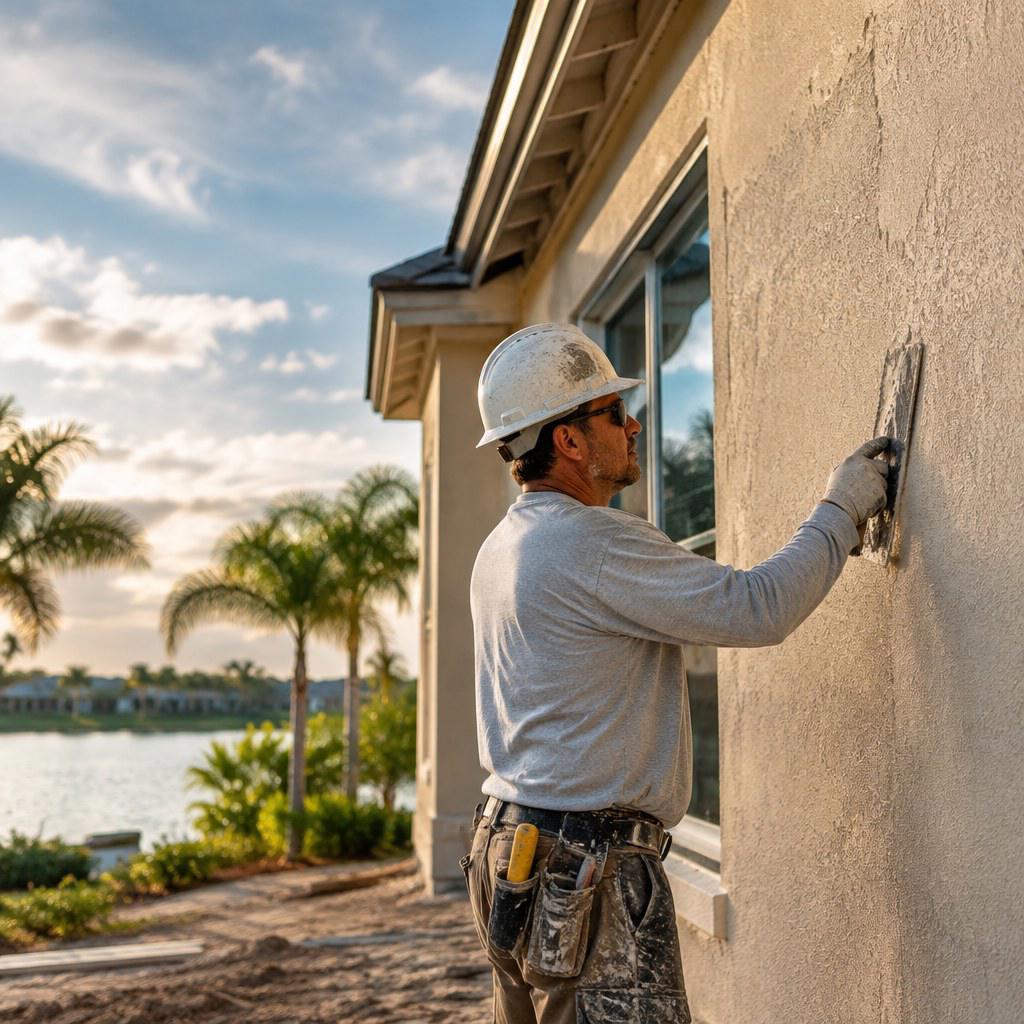
Maintenance That Extends Stucco Service Life
Inspect exterior walls periodically and after major storms. Look for cracks, bulges, staining, peeling coatings, soft areas, damaged sealant, and gaps around utilities. Keep gutters, roof drainage, sprinklers, and grade from directing water onto the façade. Clean gently; harsh pressure washing can force water into openings or damage textured finishes.
Prompt diagnosis is usually more useful than cosmetic patching. A qualified contractor can determine whether a condition is limited to the finish or involves the base coat, reinforcement, substrate, or water-management layers. A7 Constructions can support stucco installation, repair, exterior renovation, and construction planning for Central Florida properties.
Frequently Asked Questions
Can stucco be installed during Florida’s rainy season?
Yes, when conditions, scheduling, protection, and product requirements allow it. The key is preventing rain from contacting vulnerable materials and allowing each layer to cure appropriately.
Does humidity cause stucco cracks?
Not by itself. Cracking can relate to shrinkage, rapid drying, structural movement, substrate conditions, joint layout, workmanship, or impact. Humidity can make moisture problems slower to dry and therefore more persistent.
Should every crack be sealed immediately?
No. First identify the crack’s cause and depth. Sealing a moving crack with an incompatible rigid material may fail quickly, while covering a leak can delay proper correction.
Plan Your Stucco Project for Florida Conditions
For durable results, match installation timing, wall detailing, finish selection, and maintenance to Central Florida’s demanding climate.